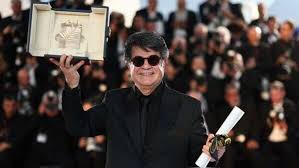
THE 78TH FESTIVAL DE CANNES WINNERS’ LIST
The 77th Festival de Cannes is open!
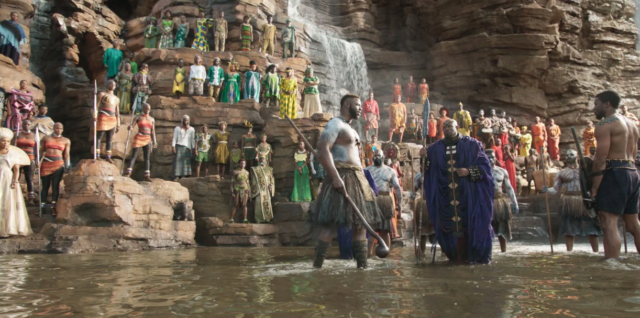
IGUAZU WATERFALLS AND THE MOVIE BLACK PANTHER
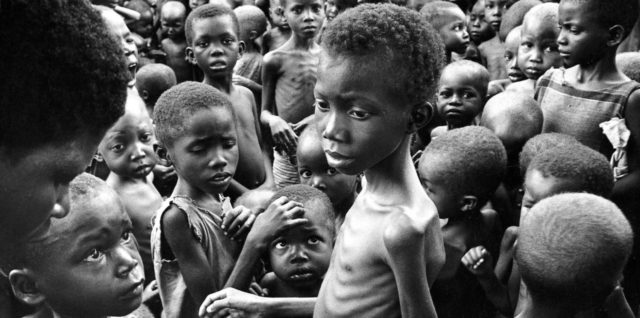
ETHNIC BIGOTRY & XENOPHOBIA AGAINST THE IGBOS IN NIGERIA
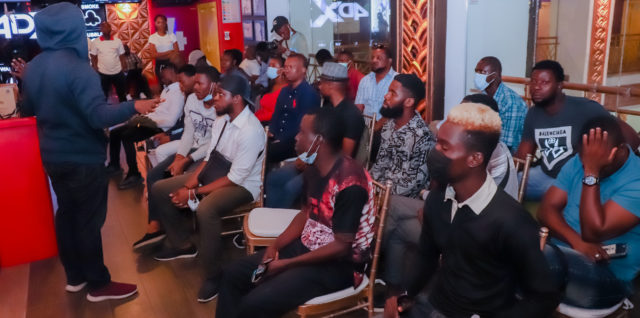
CANON/EKO INTERNATIONAL FILM FESTIVAL 2022 FILM INDUSTRY WORKSHOP

2011 MTV Movie Awards Winners

Best Male Performance: Robert Pattinson, The Twilight Saga: Eclipse
Best Villain: Tom Felton, Harry Potter and the Deathly Hallows, Part 1
Best Jaw Dropping Moment: Justin Bieber does… something, Never Say Never 3-D
Best Fight: Robert Pattinson vs. Bryce Dallas Howard & Xavier Samuel, The Twilight Saga: Eclipse
Best Kiss: Robert Pattinson & Kristen Stewart, The Twilight Saga: Eclipse
Best Line: Alexys Nycole Sanchez, Grown Ups (“I want to get chocolate-wasted!”)
Best Female Performance: Kristen Stewart, The Twilight Saga: Eclipse
Best Comedic Performance: Emma Stone, Easy A
Best Movie: The Twilight Saga: Eclipse

2011 MTV Movie Awards

Click here for the complete report with photos and videos. Enjoy!

5 Must See Indie Movies in June

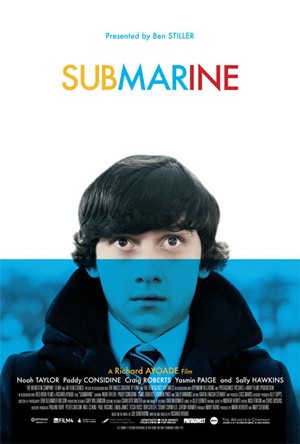
Leonard Maltin has selected five must see indie movies and you can see why and how he rated them on the Huffington Post. And number one on the list is Richard Ayoade‘s “SUBMARINE”.
Ayoade is an only child of a Norwegian mother, Dagny (née Baassuik), and a Nigerian father, Layide Ade Laditi Ayoade.

SUBMARINE

The film is based on a prize-winning novel by Joe Dunthorne. It is a dark indie comedy about a 15-year-old Oliver Tate who has two objectives: To lose his virginity before his next birthday, and to extinguish the flame between his mother and an ex-lover who has resurfaced in her life.

1. SUBMARINE

2. CAVE OF FORGOTTEN DREAMS

3.  MIDNIGHT IN PARIS

4. ANOTHER YEAR (on DVD)

5. THE CLOWNS (on DVD)

2nd Eko International Film Festival, July 9 – 14, 2011

NEW-EKO-LOGO-with-url.preview

CALL FOR ENTRY
2ND EKO INTERNATIONAL FILM FESTIVAL

The 2nd Edition of the Eko International Film Festival (EKOIFF) will be held from 9-14 July, 2011, in Lagos, Nigeria.

The different categories of film to be submitted are:

Feature Length
Short Films
Fiction
Comedy
Drama
Horror
Documentaries
Student
1 minute short films.

The submission deadlines:
Standard Deadline: May 30, 2011
Late Deadline: June 15, 2011
Final Deadline: June 25, 2011

Applications for submitting films to the 2nd EKOIFF will be available on the official EKOIFF.
For more information, visit the official EKOIFF website www.ekoiff.com, or send e-mail to contact@ekoiff.com (see link: http://www.ekoiff.com/submit.htm)

Address: 1 Bajulaiye Road, Opposite Skye bank plc Shomolu, Lagos, Nigeria
Tel: +2348033036171, +2347066379246.
Email: contact@ekoiff.com

Website: http://www.ekoiff.com/

PARTNERS:
logosupple
Silverbird-GROUP logo
silverbird_tv
Silverbird CinemasRhythm 93.7 FM logo 1
FILM-FES21

2011 Most Beautiful Girl in Nigeria Screening Dates

The final screening dates for the 2011 Most Beautiful Girl in Nigeria (MBGN) have been announced with the locations:

MBGN Screening Dates and Venues:

• May 31, 2011. Royal Marble Hotel, Benin, Edo State.

• June 2, 2011. Sports Cafe, Silverbird Showtime, Akwa Ibom Tropicana, Uyo, Akwa Ibom State.

• June 4, 2011. Platinum Lounge Silverbird Entertainment Centre, Abuja (FCT)

• June 6, 2011. Eko Hotel and Suites, Victoria Island, Lagos.

Follow the MBGN on Facebook to see more details, photos and videos of the contestants.

For confirmation and inquiry, please contact: mbgn@silverbirdgroup.com

Fiona-Aforma-Amuzie-–-MBGN-World1
Fiona Aforma Amuzie was crowned MBGN World 2010 (Most Beautiful Girl in Nigeria 2010 World). MBGN 2010 held on the 22nd of May at the prestigious Eko Hotel and Suites, Lagos. And she represented Nigeria at MISS WORLD 2010.

The Most Beautiful Girl In Nigeria (MBGN)

Beauty Pageant Holds June 25 at Eko Hotel & Suites ,Victoria Island Lagos .
There are 34 beautiful contestants from different states in Nigeria. The event starts By 6pm .

2011 MBGN 1

V1 ABIA Gabriella Ndu
V2 ABUJA Tessy Maduko
V3 ADAMAWA Nwando Ebeledike
V4 AKWA-IBOM Kome Osalov
V5 ANAMBRA Ify Jewana
V6 BAYELSA Sophie Jewal
V7 BAUCHI Chantelle Unachukm
V8 BENUE Josephine Igochie
V9 BORNO Gbemisola Shotade
V10 CROSS RIVER Agotha Eriom
V11 DELTA Chidebe Joyce
V12 EBONYI Delphine Okaban
V13 EDO Onabu Obehioye Liliane
V14 EKITI Awettada Ovoke
V15 ENUGU Obioma Isiwu
V16 GOMBE Jennifer Igwegbe
V17 IMO Urenna Oyeneke
V18 KOGI Okafov Ohichi
V19 KWARA Ngwu Oganna Linda
V20 LAGOS Grace Ndaw
V21 NASARAWA Menkiti Sylvia
V22 NIGER Amanda Simon
V23 OGUN Ige Temifope
V24 ONDO Tobi Banjoko
V25 OSUN Metu Kelechi
V26 OYO Florentina Nneka Agu
V27 PLATEAU Onaja Lovette
V28 RIVERS Mitchelle Ijeh
V29 TARABA Sylvia Nduka
V30 YOBE Lotachukm Ugwu
V31 JIGAWA Eneka Gloria
V32 KADUNA Olanide Aroguma V33 KANO Deborah Enebeli
V34 KATSINA Kenechukm Offiah

Meet the 2011 Most Beautiful Girl in Nigeria contestants for 2011

Jeta Amata is working on new film after “Black Gold”


Jeta Amata

Nick Vivarelli of the Variety reported that the ambitious Nigerian filmmaker is already working on a new international film after making “Black Gold”.

The director who is also well known for his daring film “The Amazing Grace” is going to focus on the corrupt practices of pharmaceutical multinationals in Africa in his new film “Journeys of One,” with Donald Ranvaud of “The Constant Gardner” fame as an executive producer.

Amata’s “Black Gold” had a market premiere at the 64th Cannes Film Festival. The film on the Niger Delta crisis featured top Hollywood actors like Tom Sizemore, Billy Zane and Hakeem Kae-Kazim.

“Journeys of One” will be a way to provide a more genuine take on the Big Pharma in Africa theme tackled by Hollywood in Fernando Meirelles’ “The Constant Gardner”. We like Hollywood coming to tell our story; but they miss some of the essence of the African point of view,” Amata said.

Variety reported that Amata, producer Soledad Grognett and Ranvaud are looking for a name African-American actor for one of the key roles in “Journeys” and likely to also feature an Indian star.

“The idea is to make it Hollywood, Nollywood — as the Nigerian film industry is know — and Bollywood; the three biggest markets in the world,” said Amata. “If you go to the remote villages where they don’t have proper means of communication, you find people just dying unnecessarily,” he added. “And though they don’t realize it, the real thing that killed them was some drug that they weren’t meant to take.”

“The environment in Nigeria makes it a haven for these people (the pharmaceutical companies) to run whatever tests they want and treat people like rats and guinea pigs,” Grognett added.

~ By Ekenyerengozi Michael Chima

Call for Entries: Second Eko International Film Festival, Lagos

Eko logo .org

CALL FOR ENTRY
2ND EKO INTERNATIONAL FILM FESTIVAL

The 2nd Edition of the Eko International Film Festival (EKOIFF) will be held from 9-14 July, 2011, in Lagos, Nigeria.

The different categories of film to be submitted are:

Feature Length
Short Films
Fiction
Comedy
Drama
Horror
Documentaries
Student
1 minute short films.

The submission deadlines:
Standard Deadline: May 30, 2011
Late Deadline: June 15, 2011
Final Deadline: June 25, 2011

Applications for submitting films to the 2nd EKOIFF will be available on the official EKOIFF.
For more information, visit the official EKOIFF website www.ekoiff.com, or send e-mail to contact@ekoiff.com (see link: http://www.ekoiff.com/submit.htm)

Address: 1 Bajulaiye Road, Opposite Skye bank plc Shomolu, Lagos, Nigeria
Tel: +2348033036171, +2347066379246.
Email: contact@ekoiff.com
Website: www.ekoiff.com

New-EKOIFF-Icon-286x300

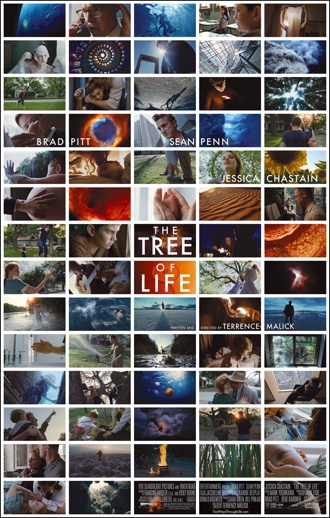
The Tree of Life wins the Palme d’Or!

2011 Palme d'Or winner
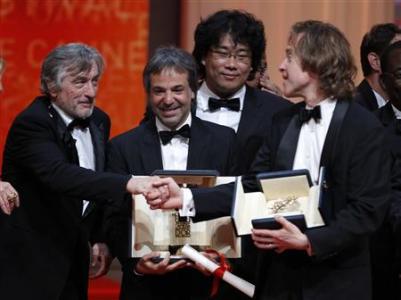
Jury President Robert de Niro (L) shakes hands with producer Bill Pohlad (R) who receives the Palme d’Or award for the film ”The Tree of Life”, by director Terrence Malick, as they pose with Camera d’Or award winner director Pablo Giorgelli (2nd L) during the closing ceremony of the 64th Cannes Film Festival, May 22, 2011.
Credit: Reuters/Eric Gaillard.

Sunday evening, American director Terrence Malick’s The Tree of Life won the prestigious Palme d’Or of the 64th Cannes Film Festival.

This is Malick’s fifth feature, starring Brad Pitt, Sean Penn and Jessica Chastain. The film story centers around a family with three boys in the 1950s. The eldest son witnesses the loss of innocence.

SYNOPSIS
The Tree of Life is the impressionistic story of a Midwestern family in the 1950’s. The film follows the life journey of the eldest son, Jack, through the innocence of childhood to his disillusioned adult years as he tries to reconcile a complicated relationship with his father. Jack finds himself a lost soul in the modern world, seeking answers to the origins and meaning of life while questioning the existence of faith.

Thetreeoflifeposter

FEATURE FILMS

SHORT FILMS

• Prize of Un Certain Regard Ex-aequo
ARIRANG directed by KIM Ki-Duk

• HALT AUF FREIER STRECKE (STOPPED ON TRACK) directed by Andreas DRESEN

• Un Certain Regard Special Jury Prize
ELENA directed by Andrey ZVYAGINTSEV

• Directing Prize of Un Certain Regard
BÉ OMID É DIDAR directed by Mohammad RASOULOF

CINEFONDATION :

• 1st Prize Cinéfondation
DER BRIEF (THE LETTER) directed by Doroteya DROUMEVA

• 2nd Prize – Cinéfondation
DRARI directed by Kamal LAZRAQ

• 3rd Prize Cinéfondation
YA-GAN-BI-HANG (FLY BY NIGHT) directed by SON Tae-gyum

The Jury
Robert De Niro
President of the Jury

Olivier ASSAYAS
Director

Martina GUSMAN

Mahamat-Saleh HAROUN
Director

Jude LAW

Nansun SHI

Uma THURMAN
Actress

Johnnie TO
Director

Linn ULLMANN

Cannes presents African Cinema by Jean-Pierre Garcia*

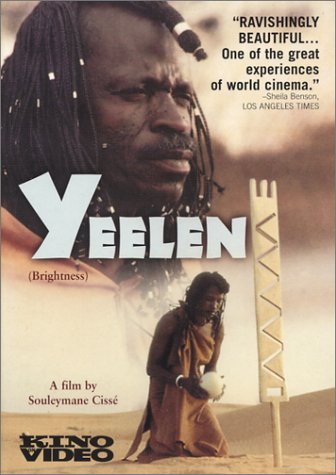
Yeelen
Yeelen (Brightness) by the Malian Souleymane Cissé was the first African film to qualify for the official competition and won the  Jury Prize at the 1987 Cannes Film Festival. It was also nominated for the Golden Palm award for the same year.

Africa at the Cannes Film Festival by Jean-Pierre Garcia*

The film that really marked the beginning of African cinema was Borom Sarret (1963) by Senegalese director SembèneOusmane. Although Sudan’s Gadalla Gubara had been the first African on the continent to make a film with his documentary Song of Karthoum (1950), Sembène Ousmaneremains the father figure by common consent. In tackling the story of a cart-driver subjected to the rules and regulations of the new regime, Borom Sarret sides with the poor of Dakar. This short film, which stirred consciousness and spoke out symbolically, led the way for future generations of filmmakers firmly focused on their own continent.

For the “father” of African cinema, the newly gained political independence only made sense if it was accompanied by a restoration of dignity, which had hitherto been suppressed by the weight of the administration and its reductive mechanisms (language, religion, education and the police). From the outset, cinema became the instrument of choice in this process of re-conquest: images were used to rebuild self-image, as well as the image of every population on the continent. In his cinema seminar at Cannes in 2005, Sembène Ousmane recalled: “I was gripped by a need to ‘discover’ Africa. Not just Senegal, but just about the entire continent… I became aware that I had to learn to make films if I really wanted to reach my people. A film can be seen and understood even by illiterate people – a book cannot speak to entire populations!” Sembène Ousmane laid the aesthetic foundations of his filmmaking (very close to Italian neo-realism) and set them in a pan-Africanist context. The initial equation was simple: independent Africa “needed” filmmakers who could (re-)awaken consciousness to counter colonial cinema, which had set out merely to entertain its audience, alienating them in the process.
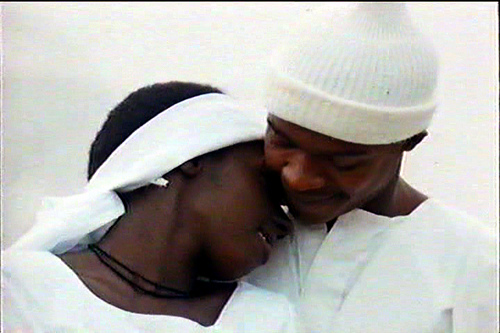
The Wind, Finyé 3
“FINYé – THE WIND” (Mali 1982, winner FESPACO & Cannes) By Souleymane Cissé 1982, Mali

Around fifteen films made their mark over the course of this first decade (1964-1974). All dealt with either the colonial past and the liberation movements, or cultural assimilation and the problems of the newly independent states (corruption, bureaucracy, the shifting of wealth, etc.) The traumatic aftermath of the colonial past was addressed in Oumarou Ganda’s Cabascabo(1) (1968, Niger), Sarah Maldoror’s Monagambee (1968, Angola), Michael Raeburn’s Rhodesia Countdown (1969, Rhodesia), Sembène Ousmane’s Emitai (1971), and Nana Mahomo’s Last Grave at Dimbaza (1974, South Africa).
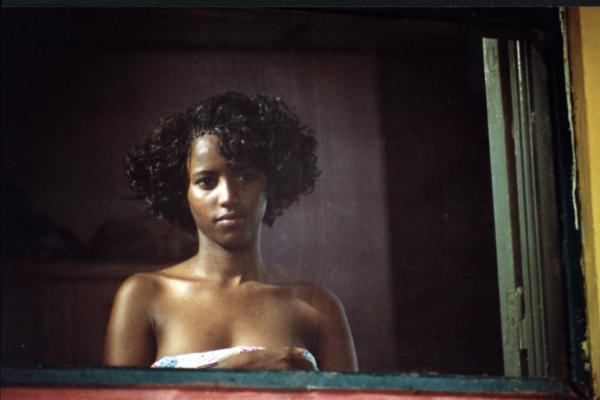
Udju Azul di Yonta, 1992
Udju Azul di Yonta, 1992 by Flora Gomes from Guinea-Bissau.

The films frequently focused on the suffocating links between the European and African capitals, as inConcerto For an Exile and Take Care, France by Désiré Écaré (1968 and 1970, Ivory Coast) or Djibril Diop-Mambéty’s Badou Boy (1970, Senegal). Other themes explored include the loss of identity through immigration, as in Sembène Ousmane’s Black Girl(1966), or the conflict with new regimes or corruption as in his The Money Order (1968) and Xala (1974).
Reconstructing Africa’s own history; weaving its identity

The Africa that made its entry into the cinematic world in 1975 had thrown off its colonial shackles. Nine films were selected at Cannes between 1975 and 1985, all of which endeavoured to reflect African reality while examining the cultural roots of societies undergoing change. One image could serve as a common denominator for works as varied as N’Diangane by Mahama Johnson Traoré (1975, Senegal), Harvest: 3,000 Years by Haile Gerima (1976, Ethiopia), Ceddo by Sembène Ousmane (1977), Ababacar Samb-Makharam’sJom (1981, Senegal) and Souleymane Cissé’s The Wind (Finyé, 1982, Mali): that of a pendulum constantly swinging between the present and the past. It is in this movement, with its focus on group identity (whether in cities or villages) in which individuals exist only in relation to a common destiny, that the films of this period can be contextualised. These films set out to recapture their country’s history: the stories of everyday men and women reflecting those of the earliest narratives and myths.

Rather than praising the brave feats of one particular character, it is “the spirit of resistance” that Sembène commends in Emitai (1971) and Ceddo (1977), just as Ababacar Samb-Makharam celebrates a sense of honour (Jom) rather than singing a eulogy to one particular man of honour. The aim of these films is to bear witness, rather than present a hero in the Western sense of the term. This rather disconcerting (for Westerners) rule of thumb, coupled with the difficulty of classifying these films into production-distribution categories, explains the relative difficulty they encountered in winning over European audiences. This reduced key films in cinematographic history, such as Djibril Diop Mambéty’s Touki Bouki (1973) or The Wind (Finyé, 1982) to mere secondary status.

African cinema had not yet emerged from its ghetto, in the sense that it had not yet acquired or won international stature. It was entirely devoted to marking out its own cultural and human space, while its filmmakers staked out their territory. The challenge in the 1980s was to achieve recognition on a national and international scale.

The real turning point for African cinema occurred in 1987 with the selection of Yeelen (Brightness) by the Malian Souleymane Cisséfor the official competition on the one hand, and of Yam Daabo (The Choice) by Burkina Faso’s Idrissa Ouedraogo for the Critics’ Week on the other. Yeelen was in fact the first Black African Film to compete at Cannes, and the film played its part to the full. The initiatory voyage undertaken by its main character setting out to master the forces surrounding him mirrors that of African cinema in the world of festivals – and Cannes in particular. The next steps were Raymond Rajaonarivelo’s Tabataba (1988, Madagascar) and Idrissa Ouedraogo’s Yaaba (1988, Burkina Faso), both of which featured in the Directors’ Fortnight. Then Tilaï (1990) by the prolific Ouedraogo, once again selected for the official competition.

But then came the events of 1991, which certain journalists hungry for an exotic headline labelled the “Black Croisette”. For the first time, there were four African feature films at Cannes: Ta Dona by Adama Drabo (Mali),Sango Malo by Bassek Ba Kobhio (Cameroon), and Laada by Drissa Touré (Burkina Faso) were screened at Un Certain Regard, while Pierre Yaméogo’s Laafi (Burkina Faso) was selected for the Critics’ Week.

The decade turned out to be a prolific one: Hyenas by Djibril Diop Mambéty was entered for the international competition in 1992, as was a brilliant adaptation of Friedrich Dürrenmatt’s The Visit. Meanwhile, tiny Guinea-Bissau made its entry at Un Certain Regard with Flora Gomes’s Udju Azul di Yonta, along with October, by unknown Mauritanian filmmaker Abderrahmane Sissako.

Attitudes towards films made in sub-Saharan Africa have changed. The strength of the themes, the unique relationships not only to a film’s locale but also to its sound and music, and the staging ideas (imbued with a sophisticated bareness) developed by African directors have provided the answers sought by so many. Beyond the obvious themes, what was once considered disconcerting has come to be seen as a sign of vitality and evidence of a constantly renewed creative energy. The link to an oral tradition is expressed by symbolic, dramatic or amusing images that are as subtle as proverbs. When, in 1991, African cinema enjoyed its “merry month of May” as the late lamented Jacques Le Glou put it, it seemed as if African cinema had at last taken off. But such a view did not take Africa’s fragile economic situation into account, or the dependence of these filmmakers on funding from countries in the North. A closer look at African film production reveals that the number of films made each year is varied and cyclical. Everything depends on the support policies of European organisations and administrations, and their levels of funding. To take just the last two decades: there were peaks of production in the early and mid 1990s as a result of significant, regular and well-distributed support, before the machine seemed to grind to a halt.

Since then, a whole new set of directors have come to the fore: Abderrahmane Sissako (Life on Earth – 1998,Heremakono – 2002, Bamako – 2006), Mahamat-Saleh Haroun (Abouna – 2002, Daratt – 2006, A Screaming Man – 2011- Chad), Flora Gomes (Po di Sangui – 1996, Nha Fala – 2002) and Newton Aduaka (Ezra – 2007- Nigeria). Meanwhile, Sembène Ousmane achieved a brilliant coda to his career with Moolaadé (2004). These key works nonetheless remain shining exceptions in an impoverished cinematographic landscape characterized by lack of commitment from African funders or states towards their filmmakers and producers. Will new digital productions lead to a long hoped-for renaissance? This seems unlikely in the near future, but then, Africa has always had an astonishing ability to surprise us!

(1) : Jean Rouch was the one who “discovered” Oumarou Ganda in I, a Negro (1958) and encouraged him (as he did a number of African filmmakers) to make his own films. Far from “viewing Africans as insects”, Jean Rouch knew how to combine an ethnologist’s values with the aesthetic demands of an accomplished film director. As a humanist, he showed respect for others as well as for himself.

* Jean-Pierre Garcia is Editor of Le Film Africain & du Sud magazine.

The Festival de Cannes would like to thank the authors for cntributing for free.

Sexual drama kicks off the Cannes Film Festival

Sleeping Beauty, starring Emily Browning, is one of 20 films up for the coverted Palme D’or.

© 2011 Reuters Entertainment

Bollywood actress
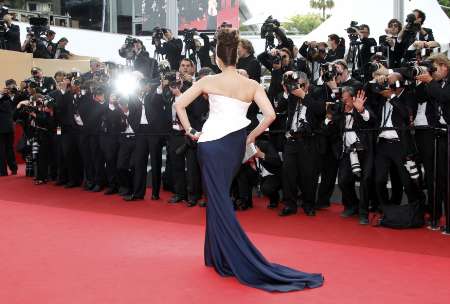
Bollywood actress Aishwarya Rai Bachchan arrives on the red carpet for the screening of the film “Sleeping Beauty”, in competition at the 64th Cannes Film Festival, May 12, 2011. Twenty films are competing in the May 11 to 22 cinema showcase, with a roll call including major screen stars, revered “auteur” directors and relative newcomers. REUTERS/Vincent Kessler (FRANCE – Tags: ENTERTAINMENT)

The 64th Cannes Film Festival is in progress with the celebrated movie stars from Hollywood, Bollywood and other notable film industries from other countries participating and competing for the coveted prizes and other pursuits. Nigeria has a pavilion at the festival, but no Nollywood movie is in competition or even out of competition.

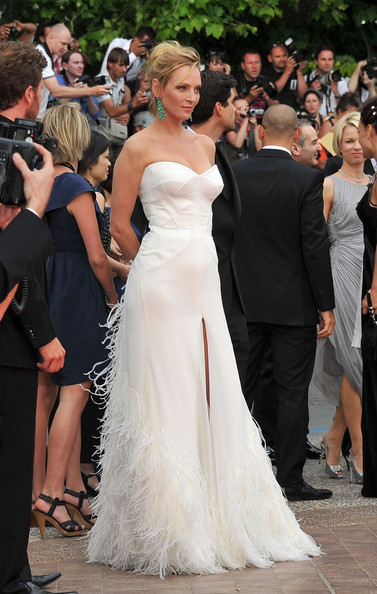
Uma 2
Jury Member Uma Thurman attends the Opening Ceremony at the Palais des Festivals during the 64th Cannes Film Festival on May 11, 2011 in Cannes, France. (Getty Images)more pics »

The galaxy of stars in attendance include the following:

Helena ALBERGARIA, Yvan ATTAL, Irene AZUELA, Antonio BANDERAS, Claude BAZ. MOUSSAWBAA, Berenice BEJO, Rachel BLAKE, Elodie BOUCHEZ, Adrien BRODY, Emily BROWNING, Claudia CARDINALE, Han CHIN, Kerry CONDON, Michael CONNORS, Ines DE LA FRESSANGE, Michel DELPECH, Catherine DENEUVE, Marat DESCARTES, Faye DUNAWAY, Kirsten DUNST, Christopher EDWARDS, Yilmaz ERDOGAN, Charlotte GAINSBOURG, Gael GARCIA BERNAL, Louis GARREL, Julie GAYET, Vahina GIOCANTE, Melanie GRIFFITH, Layla HAKIM, Salma HAYEK, Noe HERNANDEZ, Dustin HOFFMAN, Henry HOPPER, Angelina JOLIE, Sandrine KIBERLAIN, Diane KRUGER, Mélanie LAURENT, Xiaoran LI, Gong LI, Heinz LIEVEN, Vincent LINDON, Yvonne MAALOUF, Chiara MASTROIANNI, Rachel MCADAMS, Ezra MILLER, Aimee MULLINS, Ahmet MÜMTAZTAYLAN, Sami NACERI, Gilda NOMACCE, Antoinette NOUFAILY, Michel PICCOLI, Brad PITT, Adèle POLZL HAENEL, Aishwarya RAI, John C.REILLY, Ludivine SAGNIER, Riccardo SCAMARCIO, Léa SEYDOUX, Michael SHEEN, Stephanie SIGMAN, Tilda SWINTON, Christopher THOMPSON, Mia WASIKOWSKA, Lambert WILSON, Owen WILSON, José YENKUE, Elsa ZYLBERSTEIN.

You can follow the events from the opening day on 11th to the closing day on 22nd May.
Screenings of the 14h May

64th-Cannes-Film-Festival-poster

COMPETITION – Grand Théâtre Lumière

12pm / 9.45pm
HEARAT SHULAYIM
by Joseph Cedar 1h46
3.30pm
MICHAEL
by Markus Schleinzer
1h36

OUT OF COMPETITION – Grand Théâtre Lumière or Salle du Soixantième (S) or Salle Bunuel (Bu)

8.30am / 6.30pm
PIRATES OF THE CARIBBEAN : ON STRANGER TIDES
by Rob Marshall 2h17
2pm (S)
TOUS AU LARZAC
by Christian Rouaud
2h00
7.15pm (Bu)
MICHEL PETRUCCIANI
by Michael Radford
1h42
11.45pm
BOLLYWOOD – THE GREATEST LOVE S

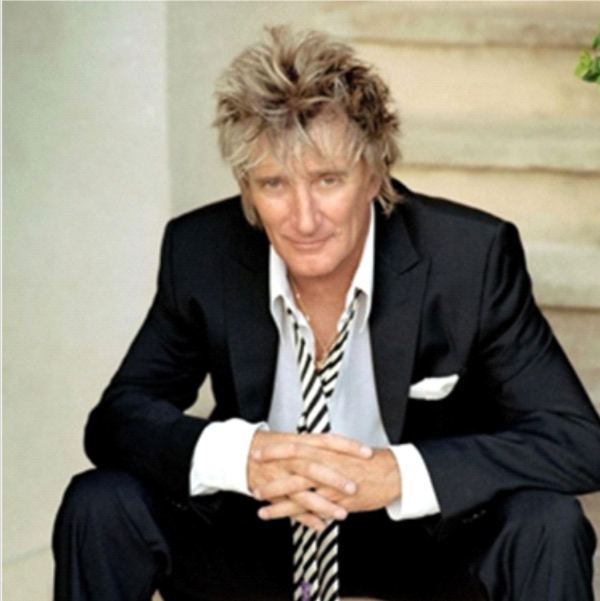
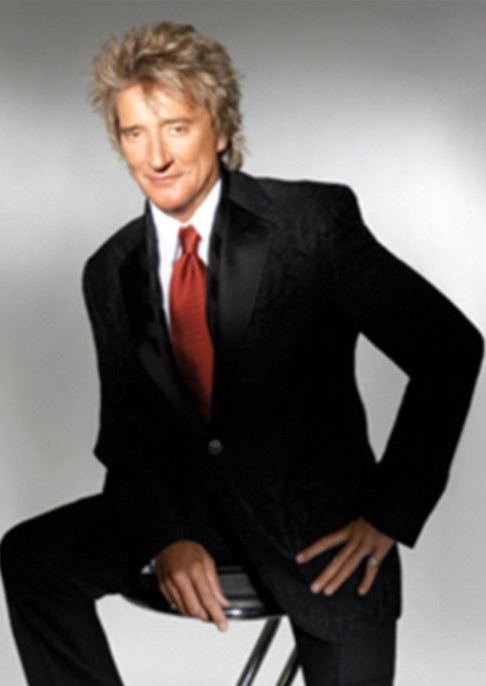
Rod Stewart Returns To Las Vegas With “The Hits.”

Rod Stewart Returns To Las Vegas With “The Hits.”

“ROD STEWART AND SIN CITY… A MATCH MADE IN ROCK ‘N’ ROLL HEAVEN” – The Hollywood Reporter
TICKETS ON SALE BEGINNING SUNDAY, MAY 15 at 10 a.m. PDT

ROD 1 a

LAS VEGAS, NV., May 10, 2011 /PRNewswire/ — Today, legendary rock icon Rod Stewart confirmed his long-rumored return to The Colosseum at Caesars Palace for his first 18 concerts of his two-year Las Vegas residency, kicking off on August 24, 2011. Rod Stewart: The Hits. will be a concert celebration featuring a set list of the rock and R&B favorites which have defined Stewart’s unparalleled five-decade-long career. The spectacular, state-of-the-art production, presented by AEG Live, will be a culmination of Stewart’s seminal hits like “Maggie May,” “You Wear it Well,” “Hot Legs,” “You’re in My Heart,” and “Some Guys Have All the Luck” mixed with a few surprise rarities and sizzling covers. Rod Stewart: The Hits. is being designed to give audiences that intimate, only in Las Vegas concert experience – with no fan more than 120 feet from the magnificent stage.

Tickets for the first 18 performances go on-sale Sunday, May 15 at 10 a.m. PDT:
Rod Stewart: The Hits. at The Colosseum at Caesars Palace
August 24 – September 11, 2011 and November 3 – 20, 2011
Ticket prices are $49/ $69/ $99/ $165/ $250 plus applicable fees.

ROD

Stewart’s triumphant return to Las Vegas continues one of the most successful and critically-acclaimed 12 months of his career, highlighted by his just-wrapped The Heart & Soul Tour with Stevie Nicks – which is currently the #2 highest grossing tour on Billboard’s 2011 Boxscore chart. The tour has garnered Stewart enormous critical praise including The New York Post which declared Stewart “Forever Young,” US Weekly, which called his set list “…a non-stop jam session” and The Globe and Mail, which declared, “Rod Stewart competes with no one…” In addition to praise for his concert performance, Stewart was just honored with the prestigious ASCAP Founders Award for his songwriting and received his 16th Grammy nomination for “Best Traditional Pop Vocal Album.” Stewart’s incredible year began with his chart-topping, 33-date 2010 European summer tour – which included four sold-out dates at London’s O2 Arena – and continued with a sold-out, eight concerts at The Colosseum in Las Vegas in November of 2010.

Tickets go on-sale Sunday, May 15 at 10 a.m. PDT and may be purchased in person at The Colosseum at Caesars Palace Box Office, by calling 1-800-745-3000 or by visiting www.ticketmaster.com, keyword “Rod Stewart.” All Ticketmaster orders may be subject to additional service charges and fees. Ticket prices are $49/ $69/ $99/ $165/ $250 (all prices include 10% Live Entertainment Tax). Dates for the limited engagement are August 24 – September 11 and November 3 – 20, 2011. All shows begin at 7:30 p.m.

Rock and Roll Hall of Famer and Grammy™ Living Legend Rod Stewart has been lauded as having one of the most distinctive voices in pop music. In a career spanning five decades, with an estimated 250 million album and single sales he is indisputably one of the most successful singers, songwriters and performers of all time. Throughout his prolific career, Stewart has garnered an amazing 16 Grammy nominations and has performed for sell-out crowds throughout the world. With his career in its fifth decade, Stewart has achieved numerous solo hit singles worldwide, most notably in the UK, where he has garnered six consecutive #1 albums and his tally of 62 hit singles include 24 that reached the Top 10, six of which gained the number one position. His hit singles include “Maggie May,” “Tonight’s the Night,” “Hot Legs,” “Da Ya Think I’m Sexy?,” “Forever Young,” “Young Turks,” “Rhythm of My Heart,” “Some Guys Have All the Luck,” “Have I Told You Lately?,” “Stay With Me,” and “First Cut is the Deepest.” For more information, visit www.rodstewart.com.

About AEG Live
AEG Live, the live-entertainment division of Los Angeles-based AEG, is dedicated to all aspects of live contemporary music performance. AEG Live is comprised of touring, festival, exhibition, broadcast, merchandise and special event divisions, fifteen regional offices and owns, operates or exclusively books thirty-five state-of-the-art venues. The current and recent concert tour roster includes artists such as Taylor Swift, The Black Eyed Peas, Bon Jovi, Usher, Carrie Underwood, Daughtry, Justin Bieber, Leonard Cohen, Wisin & Yandel, Kenny Chesney, P!nk and Paul McCartney. The company is also currently producing shows in Las Vegas including Celine Dion at The Colosseum at Caesars Palace and Barry Manilow at Paris. The AEG Live exhibition portfolio boasts the most successful exhibition of all time, Tutankhamun and the Golden Age of the Pharoahs, which has attracted more than seven million visitors since 2005. AEG Live is also the largest producer of music festivals in North America from the critically acclaimed Coachella Music & Arts Festival to Stagecoach and New Orleans Jazz & Heritage Festival. www.aeglive.com

About Caesars Palace
Caesars Palace is the world’s best known resort-casino, celebrating the grandeur that was Rome, in an 85-acre destination location that sets the standard for entertainment, dining and luxury. Reigning at the heart of the Las Vegas Strip, Caesars Palace features 3,300 hotel guest rooms and suites, 23 diverse restaurants and cafes, five-acre Garden of the Gods pools and gardens, 50,000 square foot Qua Baths & Spa and 300,000 square feet of premium meeting and convention space. The 4,300-seat Colosseum sits just steps from celebrity chef restaurants and the acclaimed Forum Shops at Caesars and spotlights world class entertainers such as Celine Dion, Elton John and Jerry Seinfeld. Find Caesars Palace on Facebook at and follow on Twitter.

# # #

Media Contacts:
Christi Nelson
AEG Live, Las Vegas
(702) 866-1451
cnelson@aeglive.com

Emily Wofford
Caesars Entertainment – Las Vegas Region
(702) 794-3171
Ewofford@caesars.com

Michelle Loosbrock
Wagner/Junker Agency
(702) 287-4130
Michelle@wjagency.com

For Rod Stewart contact:
Hannah Kampf
Conformity Media
(310) 497-9517
Hannah.Kampf@gmail.com