
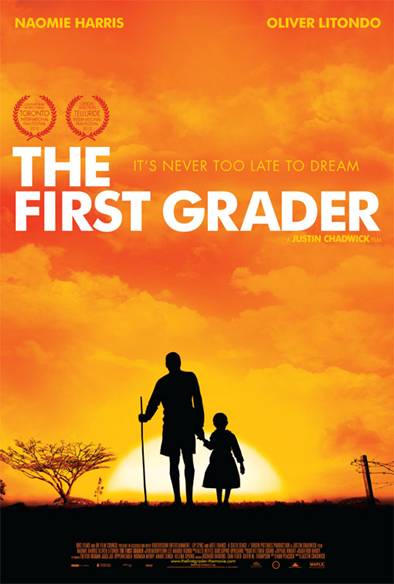
Set in a mountain village in Kenya the film tells the remarkable true and uplifting story of a proud old Mau Mau veteran who is determined to seize his last chance to learn to read and write – and so ends up joining a class alongside six year-olds. Together he and his young teacher face fierce resistance, but ultimately they win through – and also find a new way of overcoming the burdens of the colonial past.
Author Archives: admin
Hollywood icons gather to honour Legendary Actor Morgan Freeman
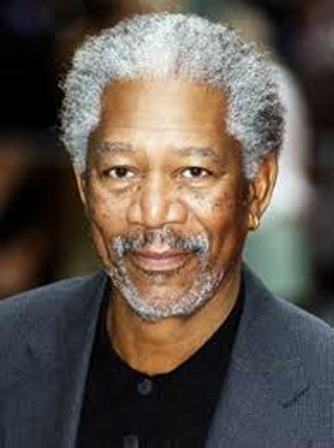
Legendary Actor Morgan Freeman
6 Jun 2011 21:26 Africa/Lagos
Clint Eastwood, Helen Mirren, Sidney Poitier, Mike Nichols, Matthew Broderick, Rita Moreno and Many More Among Those Honoring Legendary Actor Morgan Freeman at the 39th AFI Life Achievement Award Ceremony
Honor Takes Place At Historic Sony Pictures Studios Thursday, June 9, 2011 At 7:00 p.m.
Show Premieres On TV Land Sunday, June 19, 2011 At 9:00 p.m. ET/PT
PR Newswire
LOS ANGELES, June 6, 2011
LOS ANGELES, June 6, 2011 /PRNewswire/ — AFI and TV Land announced today that Clint Eastwood, Helen Mirren, Sidney Poitier, Mike Nichols, Matthew Broderick and Rita Moreno are among the luminaries in film who will pay tribute to Morgan Freeman, the 39th AFI Life Achievement Award recipient. AFI will present its highest honor for a career in film to Freeman in Los Angeles on June 9 at Sony Pictures Studios. “TV Land Presents: The AFI Life Achievement Award Honoring Morgan Freeman” will air on TV Land on Sunday, June 19, 2011 at 9:00 p.m. ET/PT .
Eastwood, Poitier and Nichols are all past AFI Life Achievement Award recipients.
Clint Eastwood, who received the AFI Life Achievement Award in 1996, has worked with Morgan Freeman many times over the years with extraordinary results, in films such as “Unforgiven,” the Oscar®-winning “Million Dollar Baby” and “Invictus.”
Sidney Poitier is one of Freeman’s biggest inspirations. In 1992, Freeman spoke at Poitier’s AFI Life Achievement Award ceremony, where he said, “Every man has his own heaven and for me, heaven has always been being in the movies, and always in my heaven…I had one bright light…Sidney Poitier.” Freeman will now share this accolade and a little slice of heaven with Poitier. Both actors took on the challenging task of playing former South African president, Nelson Mandela – Poitier in the television movie, “Mandela and de Klerk,” and Freeman on the big screen in “Invictus.”
Mike Nichols, who received the AFI Life Achievement Award last year, directed Freeman on Broadway in “The Country Girl” (2008).
Helen Mirren most recently worked with Freeman in the 2010 film, “Red,” which also co-starred Bruce Willis and Mary-Louise Parker.
Rita Moreno co-starred alongside Freeman in PBS’s “The Electric Company,” which was Freeman’s breakout role in television. The highly regarded children’s educational program won several Emmy® Awards during its broadcast run.
Matthew Broderick worked with Freeman in “Glory,” which was directed by Ed Zwick, produced by Pieter Jan Brugge and edited by Steven Rosenblum – all three are AFI Conservatory alumni. Rosenblum will receive the Franklin J. Schaffner Alumni Medal, awarded annually to an alumnus of AFI who best embodies talent, taste, dedication and commitment to quality filmmaking, as part of the Freeman gala.
The black-tie event will take place on historic Stage 15 at Sony Pictures Studios, where “The Wizard of Oz,” “Grand Hotel,” “Spiderman” and other classic movies were filmed. The stage will be transformed into an elegant ballroom to honor the storied career of Morgan Freeman. Proceeds from the AFI Life Achievement Award Gala directly support the Institute’s national educational programs and the preservation of American film history.
About the American Film Institute
AFI is America’s promise to preserve the history of the motion picture, to honor the artists and their work, and to educate the next generation of storytellers. AFI provides leadership in film, television and digital media and is dedicated to initiatives that engage the past, the present and the future of the moving image arts.
AFI preserves the legacy of America’s film heritage through the AFI Catalog of Feature Films , an authoritative record of American films from 1893 to the present, and the AFI Archive, which contains rare footage from across the history of the moving image.
AFI honors the artists and their work through a variety of annual programs and special events, including the AFI Life Achievement Award and AFI Awards. For 39 years, the AFI Life Achievement Award has remained the highest honor for a career in film while AFI Awards, the Institute’s almanac for the 21st century, honors the most outstanding motion pictures and television programs of the year. AFI’s 100 Years…100 Movies television events and movie reference lists, as well as AFI Night at the Movies, have introduced and reintroduced classic American movies to millions of film lovers. And as the largest nonprofit exhibitor in the United States, AFI offers film enthusiasts a variety of events throughout the year, including AFI Fest presented by Audi, the longest running international film festival in Los Angeles; AFI-Discovery Channel Silverdocs, the largest documentary festival in the US; and year-round programming at the AFI Silver Theatre in the Washington, DC area.
AFI educates the next generation of storytellers at its world-renowned AFI Conservatory, offering a two-year Master of Fine Arts degree in six filmmaking disciplines: Cinematography, Directing, Editing, Producing, Production Design and Screenwriting. AFI also explores new digital technologies through special workshops.
Additional information about AFI is available at AFI.com.
About the AFI Life Achievement Award
The highest honor given for a career in film, the AFI Life Achievement Award was established by the AFI Board of Trustees on February 26, 1973. It is presented to a single honoree each year based on the following criteria as mandated through a resolution passed by the AFI Board of Trustees: “The recipient should be one whose talent has in a fundamental way advanced the film art; whose accomplishment has been acknowledged by scholars, critics, professional peers and the general public; and whose work has stood the test of time.”
2011 AFI Life Achievement Award honoree Morgan Freeman joins an esteemed group of individuals who have been chosen for this distinguished honor since its inception in 1973: John Ford (1973), James Cagney (1974), Orson Welles (1975), William Wyler (1976), Bette Davis (1977), Henry Fonda (1978), Alfred Hitchcock (1979), James Stewart (1980), Fred Astaire (1981), Frank Capra (1982), John Huston (1983), Lillian Gish (1984), Gene Kelly (1985), Billy Wilder (1986), Barbara Stanwyck (1987), Jack Lemmon (1988), Gregory Peck (1989), Sir David Lean (1990), Kirk Douglas (1991), Sidney Poitier (1992), Elizabeth Taylor (1993), Jack Nicholson (1994), Steven Spielberg (1995), Clint Eastwood (1996), Martin Scorsese (1997), Robert Wise (1998), Dustin Hoffman (1999), Harrison Ford (2000), Barbra Streisand (2001), Tom Hanks (2002), Robert De Niro (2003), Meryl Streep (2004), George Lucas (2005), Sean Connery (2006), Al Pacino (2007), Warren Beatty (2008), Michael Douglas (2009) and Mike Nichols (2010).
About TV Land
TV Land is the programming destination featuring the best in entertainment on all platforms for consumers in their 40s and 50s. Consisting of original programming, classic and contemporary television series acquisitions, hit movies and a full-service Web site, TV Land is now seen in over 98 million U.S. homes.
Please log onto tvlandpress.com for up-to-the-minute information, press releases and photos.
TV Land and all related logos and titles are trademarks of Viacom International Inc.
About MTV Networks
MTV Networks, a division of Viacom (NYSE: VIA, VIA.B), is one of the world’s leading creators of entertainment content, with brands that engage and connect diverse audiences across television, online, mobile, games, virtual worlds and consumer products. The company’s portfolio spans more than 150 television channels and 400 digital media properties worldwide, and includes MTV, VH1, CMT, Logo, Nickelodeon, Nick at Nite, Nick Jr., TeenNick, AddictingGames, Shockwave, Neopets, COMEDY CENTRAL, SPIKE, TV Land, Atom, and GameTrailers.
SOURCE TV Land
CONTACT: Vanessa Reyes Smith, +1-310-752-8081, Vanessa.reyes@tvland.com, or Jennifer Zaldivar-Clark, +1-212-846-8964, Jennifer.zaldivar@tvland.com, both of TV Land
Web Site: http://www.tvland.com
8th Tarifa Film Festival Presents 148 African movies

6 Jun 2011 16:05 Africa/Lagos
8th Tarifa Film Festival Presents 148 African movies
TARIFA, June 6, 2011/African Press Organization (APO)/ — 8th African Film Festival of Tarifa presents between 11th and 19th of June 148 movies from 23 African countries, which compete for 8 awards endowed with 46 500 euros. One of the biggest European festival of African cinema welcomes this year over 200 African filmmakers including legendary African directors Abderrahmane Sissako and Moustapha Alassane and focuses among others on African Diaspore in Latin America, the role of cinema in recent revolutions in Tunis and Egypt or restrospective of Congolese cinematography.
Festival is accompanied by 3rd Africa Produce Forum, where 10 African filmmakers compete with their projects to get funding from European producers, while 4th Photoafrica competition offers to African photographers 3 000 euros in prize money. Festival, which attracts every year over ten thousands of film fans, takes place on the southernmost tip of Spanish coast only 14 km from Morocco across the Strait of Gibraltar.
COMPETITION AND AWARDS
Feature-length fiction movies (The African Dream section), documentaries (On the Other Side of the Strait section) and short films (Africa in Short section) compete for 8 awards endowed with 46 500 euros. There are awards for the best feature-length movie (15 000 euros), direction (10 000 euros),actor and actress (1 500 euros each), documentary (10 000 euros), short movie (2 000 euros), short movie audiovisual creation (1 500 euros) and Audience Award for the best feature length movie (5 000 euro).
OUT OF COMPETITION
There are 3 non-competitive sections of the festival – Open Screen (classics of African cinema, film adaptations of African literature…), Africa Rhytm (films dedicated to African music and dance), AnimAfrica (African short-length animation films).
RETROSPECTIVE
Retrospective brings 4 sections focused on: Cinema and censorship / Cinema and democracy? (the case of Tunis and Egypt), Cinema of RD Congo (retrospective of Congolese cinematography from 60´s till the present), selection of movies regarding African Diaspore in Latin America and Carte Blanche of FIDADOC, selection of the films from Festival of documentary movies in Moroccan Agadir.
3rd AFRICA PRODUCE FORUM
Ten African film directors will be pitching their new film projects at the 3rd Africa Produce Co-Production Forum to Spanish film producers and TV commissioning editors including representatives of Al-Jazeera Documentary Channel.
There are 4 selected feature-length projects (Mettou, Abderrahmane Sissako, Mauritania, The Boda Boda Thieves, Donald Mugisha/Jamie Tayler, Uganda/South Africa, And Then The Rains Return, Yemane I. Demissie, Ethiopia, Le Ntih, Narcisse Wandji, Cameroon) and 3 documentaries (Un Día Vi 10.000 Elefantes, Pere Ortín/Ramón Esono, Equatorial Guinea/Spain, Parles a Eux, Maïmuna Ndiaye, Burkina Faso, Cenizas del Perdón, Gilbert Ndunga Nsangata, Congo/Spain)
Apart from that there are 3 guest projects to enrich the forum by their experiences: Asube (feature length project), Richard Jordan, Spain, Citizens Without Borders (feature-length project), Lexy Uyi Osunde, Nigeria/Spain, Jeanne d’Arc Masriya (documentary), Iman Kamel, Egypt.
4th PROHOTAFRICA
25 photographers from 11 African countries compete with their works in finale of 4th Photoafrica contest, which offers €3,000 in prize money through 3 awards and the topic of this year is “Urban Space”. The exhibiton of altogether 27 large format photographs will be inaugurated and installed outdoors in Tarifa before and through the festival and after its closure will be travelling the whole year through Spanish and African cities.
25 photographers competing at 4th Photoafrica: Abdelmohcine Nakari (Morroco), Aboubacar Traore (Mali), Adolphus Opara (Nigeria), Djibril Drame (Senegal), Georges Senga (RDC), James Muriuki (Kenya, Hlompho Letsielo, Lesotho, Resta Nyamwanza (Zimbabwe), Mário Macilau (Mozambique), Marwen Trabelsi (Tunis), Mimi Cherono (Kenya) and 13 photographers from South Africa: Noncedo Charmaine Mathibela, Roanne Sutcliffe, Anthony Purnell, Bianca Kerstein Vinay, Cendyl Charlton, Chandre Busschau, Costas Christodoulou, David Kutlwano Moagi, Davina Gokool, Hayden Brawn, Ihsaan Haffejee, Jessica MacLeod, Kristi Bailey.
Contact:
Filip Hruby
International Press Officer
African Film Festival of Tarifa (FCAT)
Mobile: +420/775 011 550
Skype: filip.hruby2409
gabineteprensa2@fcat.es
Source: 8th African Film Festival of Tarifa
2011 MTV Movie Awards Winners
Best Male Performance: Robert Pattinson, The Twilight Saga: Eclipse
Best Villain: Tom Felton, Harry Potter and the Deathly Hallows, Part 1
Best Jaw Dropping Moment: Justin Bieber does… something, Never Say Never 3-D
Best Fight: Robert Pattinson vs. Bryce Dallas Howard & Xavier Samuel, The Twilight Saga: Eclipse
Best Kiss: Robert Pattinson & Kristen Stewart, The Twilight Saga: Eclipse
Best Line: Alexys Nycole Sanchez, Grown Ups (“I want to get chocolate-wasted!”)
Best Female Performance: Kristen Stewart, The Twilight Saga: Eclipse
Best Comedic Performance: Emma Stone, Easy A
Best Movie: The Twilight Saga: Eclipse

Click here for the complete report with photos and videos. Enjoy!
5 Must See Indie Movies in June
Leonard Maltin has selected five must see indie movies and you can see why and how he rated them on the Huffington Post. And number one on the list is Richard Ayoade‘s “SUBMARINE”.
Ayoade is an only child of a Norwegian mother, Dagny (née Baassuik), and a Nigerian father, Layide Ade Laditi Ayoade.
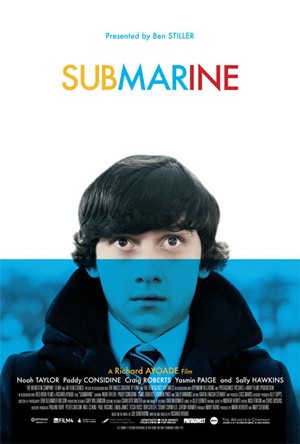
The film is based on a prize-winning novel by Joe Dunthorne. It is a dark indie comedy about a 15-year-old Oliver Tate who has two objectives: To lose his virginity before his next birthday, and to extinguish the flame between his mother and an ex-lover who has resurfaced in her life.
1. SUBMARINE
4. ANOTHER YEAR (on DVD)
5. THE CLOWNS (on DVD)
2nd Eko International Film Festival, July 9 – 14, 2011
CALL FOR ENTRY
2ND EKO INTERNATIONAL FILM FESTIVAL
The 2nd Edition of the Eko International Film Festival (EKOIFF) will be held from 9-14 July, 2011, in Lagos, Nigeria.
The different categories of film to be submitted are:
Feature Length
Short Films
Fiction
Comedy
Drama
Horror
Documentaries
Student
1 minute short films.
The submission deadlines:
Standard Deadline: May 30, 2011
Late Deadline: June 15, 2011
Final Deadline: June 25, 2011
Applications for submitting films to the 2nd EKOIFF will be available on the official EKOIFF.
For more information, visit the official EKOIFF website www.ekoiff.com, or send e-mail to contact@ekoiff.com (see link: http://www.ekoiff.com/submit.htm)
Address: 1 Bajulaiye Road, Opposite Skye bank plc Shomolu, Lagos, Nigeria
Tel: +2348033036171, +2347066379246.
Email: contact@ekoiff.com
Website: http://www.ekoiff.com/
PARTNERS:






2011 Most Beautiful Girl in Nigeria Screening Dates
The final screening dates for the 2011 Most Beautiful Girl in Nigeria (MBGN) have been announced with the locations:
MBGN Screening Dates and Venues:
• May 31, 2011. Royal Marble Hotel, Benin, Edo State.
• June 2, 2011. Sports Cafe, Silverbird Showtime, Akwa Ibom Tropicana, Uyo, Akwa Ibom State.
• June 4, 2011. Platinum Lounge Silverbird Entertainment Centre, Abuja (FCT)
• June 6, 2011. Eko Hotel and Suites, Victoria Island, Lagos.
Follow the MBGN on Facebook to see more details, photos and videos of the contestants.
For confirmation and inquiry, please contact: mbgn@silverbirdgroup.com
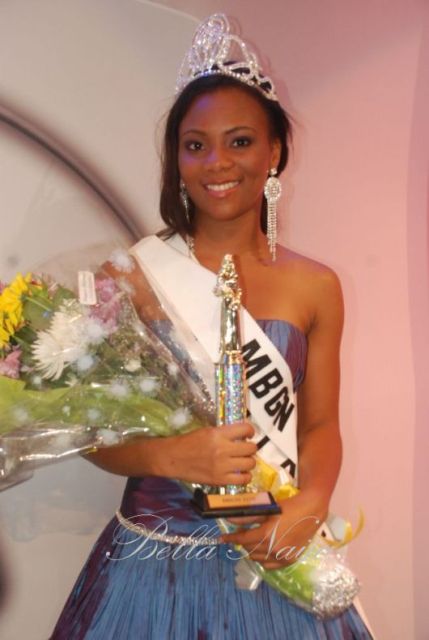
Fiona Aforma Amuzie was crowned MBGN World 2010 (Most Beautiful Girl in Nigeria 2010 World). MBGN 2010 held on the 22nd of May at the prestigious Eko Hotel and Suites, Lagos. And she represented Nigeria at MISS WORLD 2010.
The Most Beautiful Girl In Nigeria (MBGN)
Beauty Pageant Holds June 25 at Eko Hotel & Suites ,Victoria Island Lagos .
There are 34 beautiful contestants from different states in Nigeria. The event starts By 6pm .

V1 ABIA Gabriella Ndu
V2 ABUJA Tessy Maduko
V3 ADAMAWA Nwando Ebeledike
V4 AKWA-IBOM Kome Osalov
V5 ANAMBRA Ify Jewana
V6 BAYELSA Sophie Jewal
V7 BAUCHI Chantelle Unachukm
V8 BENUE Josephine Igochie
V9 BORNO Gbemisola Shotade
V10 CROSS RIVER Agotha Eriom
V11 DELTA Chidebe Joyce
V12 EBONYI Delphine Okaban
V13 EDO Onabu Obehioye Liliane
V14 EKITI Awettada Ovoke
V15 ENUGU Obioma Isiwu
V16 GOMBE Jennifer Igwegbe
V17 IMO Urenna Oyeneke
V18 KOGI Okafov Ohichi
V19 KWARA Ngwu Oganna Linda
V20 LAGOS Grace Ndaw
V21 NASARAWA Menkiti Sylvia
V22 NIGER Amanda Simon
V23 OGUN Ige Temifope
V24 ONDO Tobi Banjoko
V25 OSUN Metu Kelechi
V26 OYO Florentina Nneka Agu
V27 PLATEAU Onaja Lovette
V28 RIVERS Mitchelle Ijeh
V29 TARABA Sylvia Nduka
V30 YOBE Lotachukm Ugwu
V31 JIGAWA Eneka Gloria
V32 KADUNA Olanide Aroguma V33 KANO Deborah Enebeli
V34 KATSINA Kenechukm Offiah
Meet the 2011 Most Beautiful Girl in Nigeria contestants for 2011
Jeta Amata is working on new film after “Black Gold”

Jeta Amata
Nick Vivarelli of the Variety reported that the ambitious Nigerian filmmaker is already working on a new international film after making “Black Gold”.
The director who is also well known for his daring film “The Amazing Grace” is going to focus on the corrupt practices of pharmaceutical multinationals in Africa in his new film “Journeys of One,” with Donald Ranvaud of “The Constant Gardner” fame as an executive producer.
Amata’s “Black Gold” had a market premiere at the 64th Cannes Film Festival. The film on the Niger Delta crisis featured top Hollywood actors like Tom Sizemore, Billy Zane and Hakeem Kae-Kazim.

“Journeys of One” will be a way to provide a more genuine take on the Big Pharma in Africa theme tackled by Hollywood in Fernando Meirelles’ “The Constant Gardner”. We like Hollywood coming to tell our story; but they miss some of the essence of the African point of view,” Amata said.
Variety reported that Amata, producer Soledad Grognett and Ranvaud are looking for a name African-American actor for one of the key roles in “Journeys” and likely to also feature an Indian star.
“The idea is to make it Hollywood, Nollywood — as the Nigerian film industry is know — and Bollywood; the three biggest markets in the world,” said Amata. “If you go to the remote villages where they don’t have proper means of communication, you find people just dying unnecessarily,” he added. “And though they don’t realize it, the real thing that killed them was some drug that they weren’t meant to take.”
“The environment in Nigeria makes it a haven for these people (the pharmaceutical companies) to run whatever tests they want and treat people like rats and guinea pigs,” Grognett added.
~ By Ekenyerengozi Michael Chima
Call for Entries: Second Eko International Film Festival, Lagos
CALL FOR ENTRY
2ND EKO INTERNATIONAL FILM FESTIVAL
The 2nd Edition of the Eko International Film Festival (EKOIFF) will be held from 9-14 July, 2011, in Lagos, Nigeria.
The different categories of film to be submitted are:
Feature Length
Short Films
Fiction
Comedy
Drama
Horror
Documentaries
Student
1 minute short films.
The submission deadlines:
Standard Deadline: May 30, 2011
Late Deadline: June 15, 2011
Final Deadline: June 25, 2011
Applications for submitting films to the 2nd EKOIFF will be available on the official EKOIFF.
For more information, visit the official EKOIFF website www.ekoiff.com, or send e-mail to contact@ekoiff.com (see link: http://www.ekoiff.com/submit.htm)
Address: 1 Bajulaiye Road, Opposite Skye bank plc Shomolu, Lagos, Nigeria
Tel: +2348033036171, +2347066379246.
Email: contact@ekoiff.com
Website: www.ekoiff.com
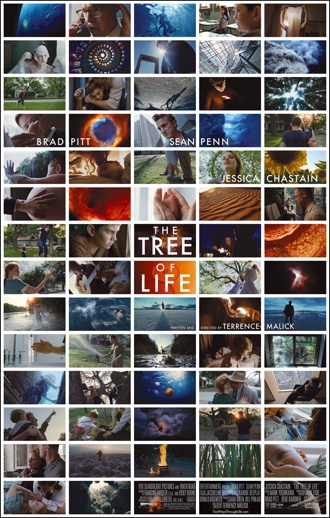
The Tree of Life wins the Palme d’Or!
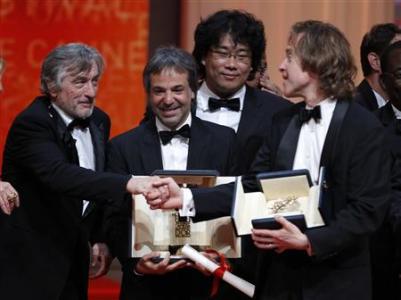
Jury President Robert de Niro (L) shakes hands with producer Bill Pohlad (R) who receives the Palme d’Or award for the film ”The Tree of Life”, by director Terrence Malick, as they pose with Camera d’Or award winner director Pablo Giorgelli (2nd L) during the closing ceremony of the 64th Cannes Film Festival, May 22, 2011.
Credit: Reuters/Eric Gaillard.
Sunday evening, American director Terrence Malick’s The Tree of Life won the prestigious Palme d’Or of the 64th Cannes Film Festival.
This is Malick’s fifth feature, starring Brad Pitt, Sean Penn and Jessica Chastain. The film story centers around a family with three boys in the 1950s. The eldest son witnesses the loss of innocence.
SYNOPSIS
The Tree of Life is the impressionistic story of a Midwestern family in the 1950’s. The film follows the life journey of the eldest son, Jack, through the innocence of childhood to his disillusioned adult years as he tries to reconcile a complicated relationship with his father. Jack finds himself a lost soul in the modern world, seeking answers to the origins and meaning of life while questioning the existence of faith.
FEATURE FILMS
-
Palme d’Or
THE TREE OF LIFE directed by Terrence MALICK
-
Grand Prix Ex-aequo
BIR ZAMANLAR ANADOLU’DA (ONCE UPON A TIME IN ANATOLIA) directed by Nuri Bilge CEYLAN
- LE GAMIN AU VÉLO (THE KID WITH A BIKE) directed by Jean-Pierre et Luc DARDENNE
-
Award for Best Director
-
Award for Best Screenplay
-
Award for Best Actress
Kirsten DUNST in MELANCHOLIA directed by Lars VON TRIER
-
Award for Best Actor
Jean DUJARDIN in THE ARTIST directed by Michel HAZANAVICIUS
-
Jury Prize
-
Vulcain Prize for an artist technician, awarded by the C.S.T.
LA PIEL QUE HABITO (THE SKIN I LIVE IN) directed by José Luis ALCAINE
-
Special Distinction by the C.S.T.
WE NEED TO TALK ABOUT KEVIN directed by Paul DAVIES, Joe BINI
SHORT FILMS
-
Palme d’Or – Short Film
CROSS (CROSS – COUNTRY) directed by Maryna VRODA
-
Jury Prize – Short Film
BADPAKJE 46 (SWIMSUIT 46) directed by Wannes DESTOOP
• Prize of Un Certain Regard Ex-aequo
ARIRANG directed by KIM Ki-Duk
• HALT AUF FREIER STRECKE (STOPPED ON TRACK) directed by Andreas DRESEN
• Un Certain Regard Special Jury Prize
ELENA directed by Andrey ZVYAGINTSEV
• Directing Prize of Un Certain Regard
BÉ OMID É DIDAR directed by Mohammad RASOULOF
CINEFONDATION :
• 1st Prize Cinéfondation
DER BRIEF (THE LETTER) directed by Doroteya DROUMEVA
• 2nd Prize – Cinéfondation
DRARI directed by Kamal LAZRAQ
• 3rd Prize Cinéfondation
YA-GAN-BI-HANG (FLY BY NIGHT) directed by SON Tae-gyum
The Jury
Robert De Niro
President of the Jury
•
Olivier ASSAYAS
Director
•
Martina GUSMAN
•
Mahamat-Saleh HAROUN
Director
•
Jude LAW
•
Nansun SHI
•
Uma THURMAN
Actress
•
Johnnie TO
Director
•
Linn ULLMANN